Do Sole Proprietors Need a Business Bank Account? (Canada)
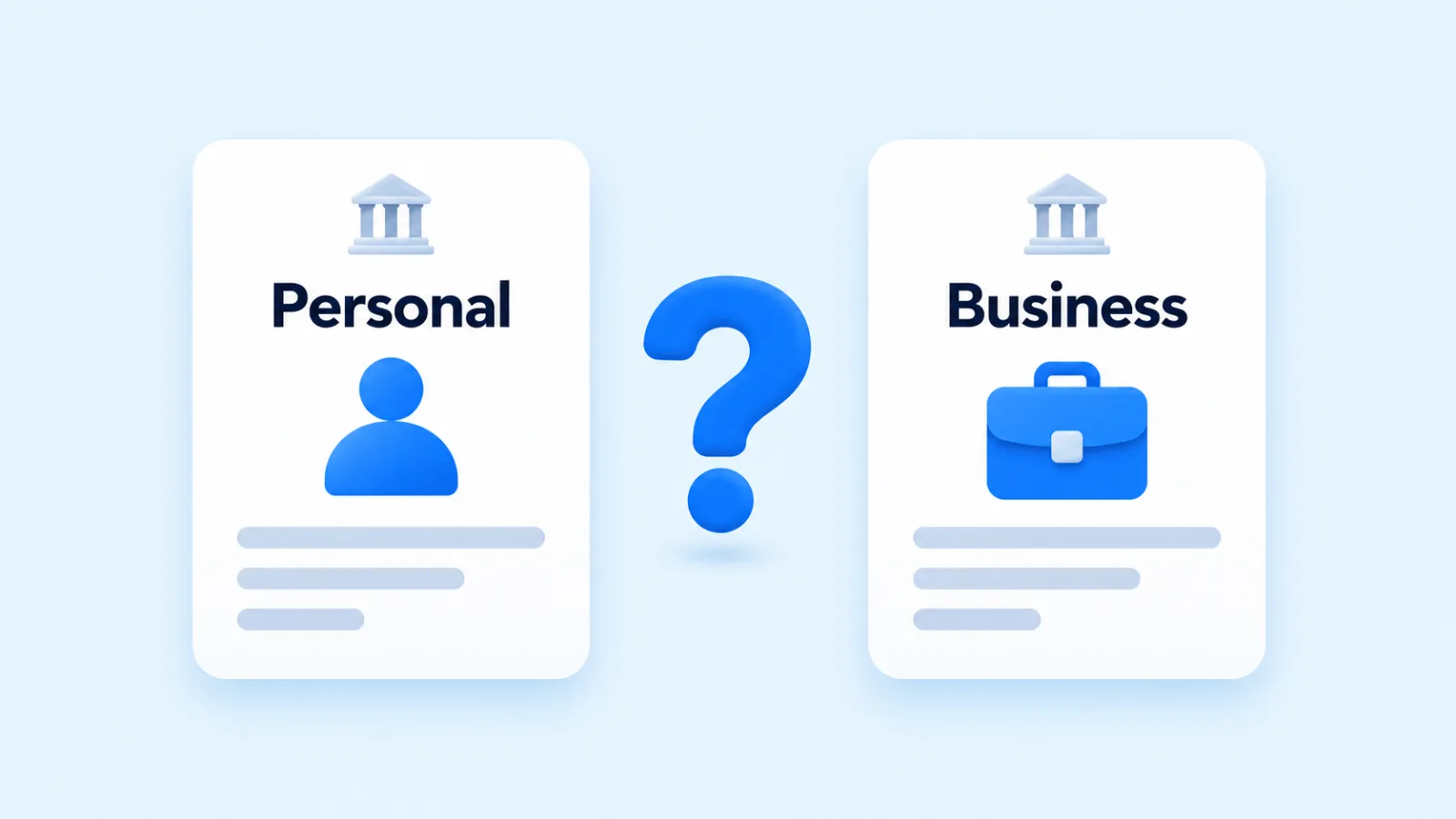
You landed your first clients (Good job, btw!), and the payments are arriving in the same chequing account as your rent, groceries and streaming subscriptions. Is that a problem?
Short answer: for a sole proprietor, a separate account makes bookkeeping easier, and the tax rules don't require it to be a business account. A personal account is an option only if your bank's terms permit business use; otherwise, choose a business account. If you're incorporated, keep the corporation's money in an account in the corporation's name.
The short version
- Sole proprietor under your own name: no tax rule requires a business account. Use a separate account just for business. A second personal account works only if your bank's terms allow business use.
- Registered business name: the CRA says you'll need a separate account to process cheques payable to your business name. Ask your bank what it requires for e-transfers and other payments in that name.
- Corporation: the corporation is a separate legal person. Keep its money in an account in its name; paying personal expenses from it creates tax problems.
- Either way: set aside the GST/HST or QST you charge, and remember it can be due before your client pays.
Do sole proprietors need a business bank account?
Not under the tax rules. As a sole proprietor, you and your business are the same person, and the CRA doesn't require a dedicated business account. The one specific case it mentions: if your business has a name other than your own, you'll need a separate bank account to process cheques payable to the business.
Your bank may have its own rules, though. Some personal account agreements don't allow business use at all, or limit the number of transactions. Read yours before you start depositing client payments.
What the CRA does require is good records. Generally, keep business records for at least six years from the end of the last tax year they relate to; some records must be retained longer. When business and personal transactions share one account, every line on your statement becomes a question: was this coffee a client meeting or a Saturday morning? Was that e-transfer a client payment or your sister paying you back?
That's the real cost of a mixed account:
- Tax time takes longer. You (or your accountant, by the hour) sort through a year of transactions to separate business from personal.
- Expenses get missed. Deductible expenses buried among personal ones are easy to overlook, and so are the input tax credits you can claim on them if you're registered and the expense is eligible. The CRA's Guide T4002 lists what self-employed people can deduct, and only the business portion of a mixed expense counts.
- Reviews get harder. A separate account makes business transactions easier to identify, but you still need receipts and records explaining their business purpose.
- You lose track of your real numbers. It's hard to know whether the business is profitable when its money is mixed with yours.
When a personal account is fine, and when it isn't
A personal account can work if:
- your bank's terms permit business use of that account;
- you operate under your own name (for example, "Marie Tremblay");
- you're just starting out, with a handful of clients; and
- you dedicate a separate personal account to business only.
When all four are true, a second personal chequing account used only for business gives you most of the benefit of separation, often with lower fees. If your bank's terms don't allow business use, open a business account instead.
You'll want a business account if:
- your bank's personal account terms don't permit business use;
- you operate under a registered business name and receive cheques payable to it, or clients pay that name;
- you're incorporated;
- you need business services: merchant accounts, business credit, payroll, or multiple signatories;
- your transaction volume is beyond what a personal account allows.
To open a business account under a registered name, banks typically ask for proof of registration, such as your Quebec enterprise number (NEQ) or your provincial business name registration. Registering in Quebec? Our guide to registering a business in Quebec explains when you need an NEQ at all.
If you're incorporated: keep the corporation's money separate
A corporation is a separate legal person. Its income belongs to the corporation, not to you, so the practical rule is simple: use a bank account in the corporation's name.
Using the corporate account for personal expenses, or depositing corporate income into your personal account, can be treated as a shareholder loan or a taxable benefit to you. The CRA's own audit manual lists the payment of a shareholder's personal expenses by the corporation as a typical shareholder benefit. Pay yourself properly, through salary or dividends, and keep the two sides of the line clean. Your accountant will thank you.
Business vs. personal account at a glance
| Personal account (dedicated to business) | Business account | |
|---|---|---|
| When does it fit? | Sole proprietors under their own name, only if the bank's terms permit business use | Corporations; cheques payable to a business name; any case where your bank's personal terms don't allow business use |
| Monthly fees | Often lower | Usually higher, with transaction tiers |
| Accepts payments to a business name | Generally no | Yes |
| Business services (merchant, credit, multiple signatories) | Limited | Yes |
| Looks professional to clients | Fine for e-transfers in your name | Better for corporate clients and cheques |
| Keeps your books clean | Yes, if used for business only | Yes |
How to set up your business money
- Open one account for business only, personal or business depending on your bank's terms and your structure. Every client payment goes in; every business expense comes out.
- Pay yourself by transfer. Move money to your personal account as "owner's draw" (sole proprietor) or salary or dividends (corporation). Don't pay personal bills from the business account.
- Set aside sales tax. If you're registered, the GST/HST or QST on your invoices isn't yours. A savings sub-account where you move the tax portion of each payment makes filing day easier. Remember that GST/HST may need to be reported and remitted before your client pays: the CRA generally expects tax on an invoice to be reported in the period you issued it, even if it hasn't been paid yet. Setting aside tax as payments arrive helps with cash flow, but it doesn't determine when the tax is due. See how to file your GST/HST return.
- Set aside income tax too. As a self-employed person, no one withholds tax for you. Many freelancers move a fixed percentage of each payment into a tax savings account. The freelance rate calculator helps you price with taxes and expenses in mind.
- Use a separate credit card for business purchases, so expenses don't mix either.
- Keep receipts for every business expense. If you're registered, you'll need them to claim input tax credits on eligible expenses, and the CRA spells out which GST/HST records to keep, including sales and purchase invoices.
Where your invoices fit in
A separate account works best when the money arriving in it is easy to match to an invoice.
- Put payment instructions on every invoice: your Interac e-Transfer email or bank details, so clients pay into the right account.
- Use the invoice number as the payment reference, so each deposit can be matched to an invoice.
- Offer online payment if you can. A card payment is recorded against its invoice right away. The payout to your bank is a separate step: payment processors often combine several payments in one deposit and deduct fees or refunds, so you still reconcile payouts in your bookkeeping.
InvoiceCast puts your payment instructions on every invoice, can collect card payments online, and records each payment against the invoice it pays, so you always know what's paid and what's outstanding. On Pro, expense tracking records each expense with its tax split out. Creating a single invoice right now? Try the free invoice generator.
FAQ
Can I use my personal bank account for my business in Canada?
Only if your bank's terms permit business use of that account. If they do and you operate under your own name, dedicate a separate personal account to business only. If they don't, open a business account.
Does the CRA require a separate business bank account?
Not in general. The CRA says you'll need a separate account to process cheques payable to a business name other than your own. Otherwise, what it requires is complete records: generally kept for at least six years from the end of the last tax year they relate to, and longer for some records. A separate account makes that much easier.
Do I need a business account to accept e-transfers?
Not if clients pay you under your own name and your bank's terms allow business use of your personal account. If clients pay a registered business name, ask your bank; it will usually require an account in that name.
Should I keep GST/HST in a separate account?
It's a good habit. The sales tax you charge belongs to the government until you remit it. Keep in mind that it's generally reportable in the period you issue the invoice, not when you're paid, so don't wait for payment before setting money aside.
I'm incorporated. Can I pay personal expenses from the business account?
Avoid it. Personal expenses paid by the corporation can be treated as a shareholder loan or a taxable benefit. Pay yourself first, then spend from your personal account.
Keep business money easy to track, starting with your invoices. Start free with InvoiceCast →
Official sources
- CRA: Sole proprietorship
- CRA: Where to keep your records, for how long
- CRA: Guide T4002, Self-employed Business, Professional, Commission, Farming, and Fishing Income
- CRA: Guide RC4022, General Information for GST/HST Registrants
- CRA: GST/HST, what records to keep
- CRA: Income Tax Audit Manual, benefits conferred on shareholders
This article provides general information, not legal, tax or financial advice. Last updated October 2026.